

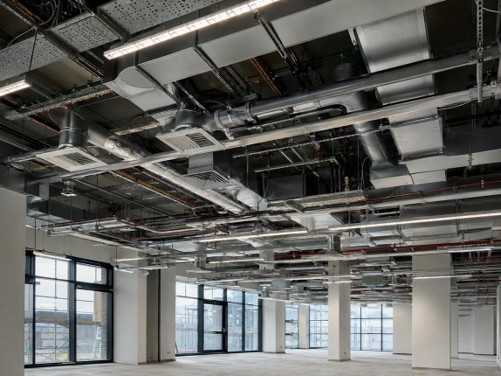
The hidden costs, warranty risks, and operational responsibilities that can affect your investment long before building turnover.
On large construction projects, maintaining proper temperature and humidity can be a challenge, particularly as buildings become enclosed and natural ventilation disappears.
One solution is to put permanent mechanical equipment into service before construction is complete.
Using installed HVAC systems can help maintain environmental conditions necessary for flooring, adhesives, paint, woodwork, and other finishes. It can also provide more comfortable working conditions and potentially reduce the need for temporary equipment.
But there’s an important question building owners should ask:
What happens to the equipment, its warranty, and its long-term performance when it starts operating months—or even years—before the building is occupied?
The answer can have significant financial and operational implications.
From an owner’s representation perspective, early equipment operation requires more than simply turning on the system. It demands careful planning, clearly defined responsibilities, and ongoing oversight to protect the owner’s investment.
- Your Equipment Warranty May Start Before You Occupy the Building
One of the most overlooked risks of early mechanical equipment operation is its effect on manufacturer warranties.
Depending on the manufacturer’s terms, equipment warranties may begin a specified number of months after delivery or when factory startup occurs.
That means putting a chiller, air handler, boiler, or other major mechanical component into service during construction could trigger warranty coverage well before the building is ready for occupancy.
Consider a project where permanent mechanical equipment is started 12 months before substantial completion.
If the applicable warranty period begins at startup, the owner could lose a significant portion of that coverage before taking possession of the facility.
For major equipment, that can represent substantial financial exposure.
What should owners consider?
Before authorizing early startup, the project team should review manufacturer-specific warranty terms, identify coverage limitations, and evaluate whether extended warranties or other protections are appropriate.
An owner’s representative can help coordinate these discussions before decisions are made that could affect long-term equipment protection.
- Who Is Responsible for Maintaining the Equipment?
Once mechanical equipment is operational, preventive maintenance becomes necessary.
Depending on the system, maintenance may include filter replacements, lubrication, belt inspections, routine servicing, and manufacturer-required maintenance activities.
But during construction, an important question arises:
Who has care, custody, and control of the equipment?
There are generally two approaches.
Contractor Responsibility
The contractor may retain responsibility for operating and maintaining the equipment until turnover.
This can simplify coordination with ongoing construction activities, but owners should ensure that maintenance requirements, costs, schedules, and documentation are clearly defined.
Without proper oversight, maintenance activities can be missed or inadequately documented, potentially affecting equipment performance and warranty coverage.
Owner Responsibility
Alternatively, the owner may assume responsibility for operating and maintaining the equipment before construction is complete.
This provides greater direct oversight but can create operational challenges.
The owner’s facilities team may need to be onboarded earlier than anticipated and coordinate shutdowns, system tie-ins, lockout/tagout procedures, and other activities with the construction team.
These responsibilities can require additional staffing, coordination, and expense.
Neither approach is universally better. The appropriate decision depends on the project, the owner’s capabilities, and the risks involved.
The key is to establish clear responsibility before equipment is placed into service—not after a problem occurs.
- Construction Is a Harsh Environment for Mechanical Equipment
Permanent HVAC systems are designed to operate in buildings with controlled environmental conditions.
Construction sites are anything but controlled.
Dust, debris, sanding, grinding, and other construction activities introduce contaminants that can accumulate in air-handling equipment, filters, and duct work.
When permanent systems operate during these activities, they may be exposed to conditions far more demanding than those encountered during normal building operations.
Without appropriate protective measures, owners risk receiving equipment that has already experienced unnecessary wear or contamination.
Protective strategies may include:
- Installing temporary filtration at return-air and exhaust-air openings.
- Protecting air-handler inlets with appropriate temporary filters.
- Establishing filter inspection and replacement schedules based on actual site conditions.
- Restricting system operation in areas with ongoing dust-generating activities.
- Verifying cleanliness before connecting or operating systems serving completed spaces.
Importantly, these measures require ongoing monitoring.
Installing temporary filters is not enough if no one is assigned to inspect or replace them.
An owner’s representative can help ensure that protective measures are incorporated into contractor responsibilities and verified throughout construction.
- Maintenance Documentation Protects More Than the Equipment
Documentation is another critical consideration.
Manufacturers may request maintenance records when evaluating warranty claims. Missing or incomplete records can complicate the process and potentially jeopardize coverage.
For owners, this means maintenance documentation should begin when equipment starts operating—not when the building is turned over.
Records should clearly identify:
- Required preventive maintenance activities
- Inspection and service dates
- Responsible personnel or service providers
- Filter changes and other routine maintenance
- Identified deficiencies and corrective actions
- Manufacturer service visits and recommendations
These records should be maintained consistently, regardless of whether the contractor or owner is responsible for the equipment.
Just as importantly, completed maintenance should be verified.
From an owner’s perspective, documented and verified maintenance is an essential part of protecting equipment warranties and long-term asset value.
- Building Turnover Shouldn’t Mean Inheriting Maintenance Problems
Imagine receiving the keys to a newly completed facility only to discover that major mechanical equipment already needs servicing.
Filters are dirty. Air handlers require cleaning. Maintenance records are incomplete. And equipment warranties may already be partially exhausted.
Although the building is new, its mechanical systems have been operating in a construction environment for months.
This is why early equipment operation must be addressed in turnover planning.
Before accepting the systems, owners should consider requiring:
Final filtration and cleaning. Replace temporary and permanent filters as appropriate and evaluate whether air-handler or duct cleaning is necessary.
Manufacturer inspections. Arrange factory-authorized service and inspections for major mechanical equipment, with sufficient time to correct identified deficiencies.
Completion of corrective work. Resolve significant maintenance or performance issues before final acceptance.
Complete maintenance records. Confirm that required preventive maintenance and service activities are documented and available to the facilities team.
Warranty verification. Confirm the remaining warranty coverage and ensure applicable extensions and registration requirements have been addressed.
These activities help ensure the owner receives systems that are clean, properly maintained, and ready for reliable operation.
- Why This Matters Even More for Life Sciences and cGMP Facilities
For owners of laboratories, pharmaceutical manufacturing facilities, and other regulated environments, mechanical system performance is especially important.
HVAC systems may play a critical role in maintaining temperature, humidity, pressure relationships, and environmental conditions necessary for facility operations.
Contamination, premature equipment wear, or incomplete maintenance documentation can complicate commissioning, qualification, and operational readiness.
In these environments, early mechanical system operation should be carefully coordinated with the project’s commissioning and facility startup strategy.
The objective is not simply to make the systems operational during construction.
It’s to ensure those systems can reliably support the facility’s intended operations after turnover.
- The Owner’s Representative: Looking Beyond Construction Completion
Decisions about early mechanical equipment operation often involve multiple stakeholders, including contractors, design professionals, equipment manufacturers, commissioning teams, and facilities personnel.
Each has a role, but the owner’s long-term interests must remain central.
An experienced owner’s representative helps evaluate these decisions from a broader perspective, considering not only immediate construction needs but also life-cycle costs, warranties, operational responsibilities, and facility readiness.
This includes helping owners:
- Evaluate the benefits and risks of early mechanical system startup.
- Establish clear care, custody, and control responsibilities.
- Identify maintenance and warranty requirements before equipment is activated.
- Coordinate environmental protection and monitoring measures.
- Verify maintenance documentation and system condition.
- Plan for complete, well-documented equipment turnover.
These considerations may seem minor compared with the overall construction budget.
But overlooking them can create unnecessary costs, operational disruptions, and long-term maintenance challenges.
Protecting the Owner’s Investment Starts Before Turnover
Using permanent mechanical equipment during construction can be a practical solution for maintaining environmental conditions and supporting project progress.
But the decision should never be made without understanding its implications.
Equipment warranties, maintenance responsibilities, system cleanliness, and turnover requirements all affect the long-term value of the owner’s investment.
At DCMG, we believe successful construction management extends beyond completing the building. It means anticipating risks, protecting critical assets, and ensuring facilities are prepared to perform as intended.
DCMG serves as an extension of the owner’s team, helping manage complex construction projects with a focus on quality, accountability, and operational readiness.
Learn more about our owner’s representation and project management services at dcmg.us.
Prefer to Listen?
In this episode of Management Under Construction, Dee Davis explores the risks of putting permanent mechanical equipment into service during construction, including warranty considerations, maintenance responsibilities, system protection, and preparing equipment for turnover.
🎧 Listen to The Hidden Risk of Putting Mechanical Equipment into Service During Construction