

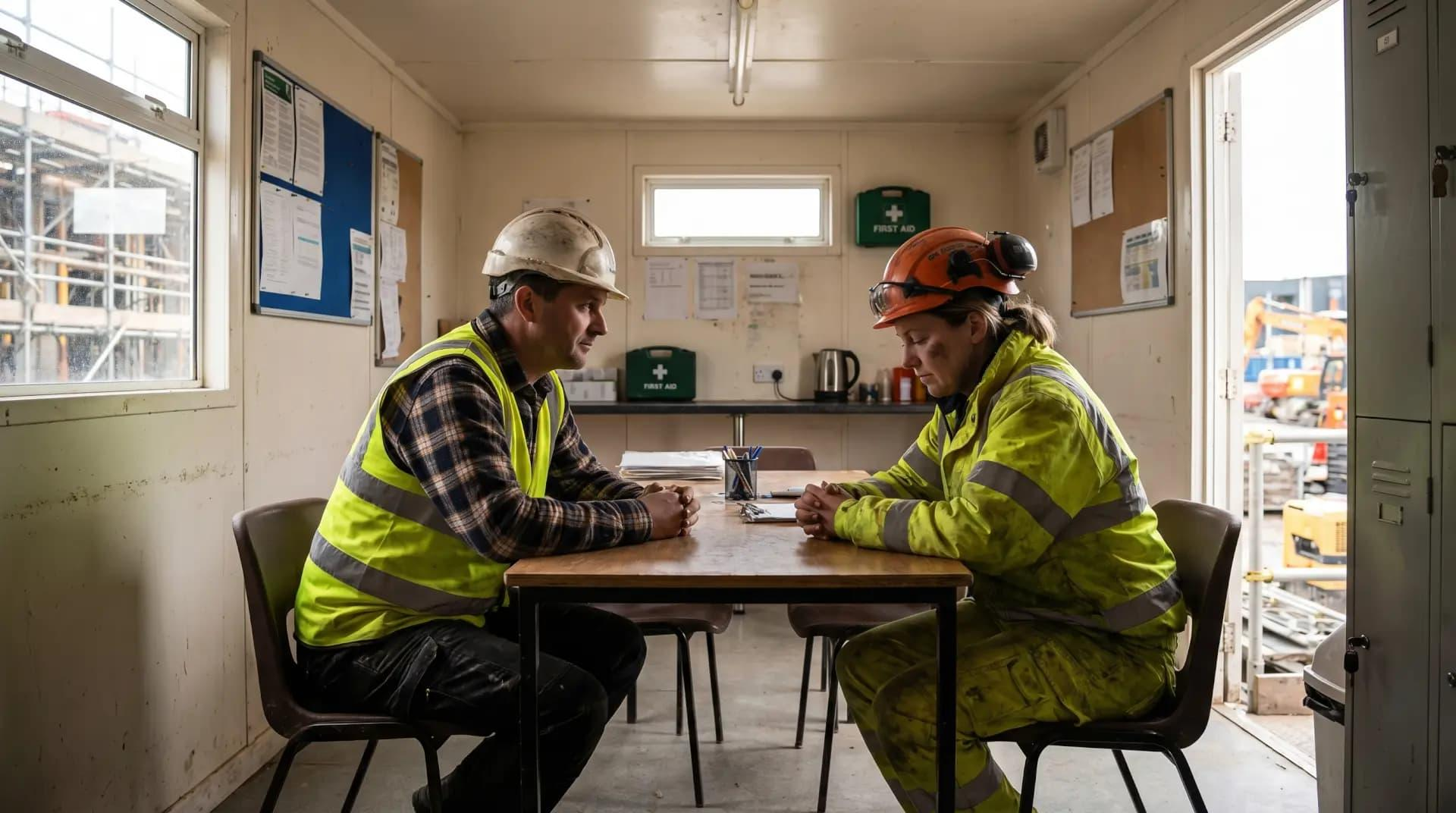
Construction is an industry built around safety.
We talk about fall protection, PPE, equipment, training, jobsite hazards, and the responsibility to make sure everyone goes home safely at the end of the day.
But there is another aspect of safety that isn’t always as visible: mental health.
September brings increased attention to suicide prevention in the construction industry, making it an important time to revisit a conversation from the Management Under Construction podcast: Mental Health in Construction, with Dee Davis and Brad Wyant.
If you prefer to read rather than listen, here are some of the important ideas from their conversation.
The Pressure of “It’s Never Enough”
There is a lot to love about construction. Every project is different. Problems have to be solved quickly, teams work together, and you get to see something tangible take shape in front of you.
But many of the things that make construction exciting can also make it stressful.
Schedules are demanding. Deadlines move. Problems arise unexpectedly. Long hours and overtime can become routine. Some workers travel extensively or spend long periods away from their families.
And no matter how quickly the team moves, there can always be pressure to move faster.
In the podcast, Dee and Brad discuss a feeling that will be familiar to many people in the industry: it’s never enough.
Finish one deadline and another is waiting. Complete one project and the next may already be starting. Often, the most demanding final stages of one project overlap with the beginning of another.
That pace affects people throughout the industry—from apprentices and tradespeople in the field to superintendents, project managers, contractors, designers, consultants, and owners.
Add the normal pressures of life outside work, and there may be very little opportunity to recover.
When Stress Becomes a Safety Issue
Construction is physically demanding, and injuries can have consequences beyond the initial accident. Ongoing pain, exhaustion, stress, and the pressure to keep working can all affect a person’s well-being.
Dee and Brad discuss substance use in the industry and how physical pain and prolonged stress can contribute to unhealthy ways of coping. There’s also a direct jobsite concern: impairment while performing inherently dangerous work creates additional risk for the individual and everyone around them.
It’s a reminder that physical safety and mental well-being aren’t separate issues.
Mental health is a safety issue.
We already understand that fatigue, distraction, and impairment can affect someone’s ability to work safely. Stress and mental health deserve a place in that same conversation.
More Communication Tools Don’t Always Mean Better Communication
Construction has more ways to communicate than ever before: email, text messages, Teams, project-management platforms, smartphones, photos, video calls, and digital drawings.
Yet, as Dee and Brad discuss, more communication tools don’t necessarily mean we’re communicating better.
An email may transfer information—or responsibility—but it doesn’t always solve the problem. Sometimes the better option is to pick up the phone, walk across the trailer, or have a face-to-face conversation.
That becomes particularly important when people are already under pressure. A short email can be misunderstood. A routine disagreement can escalate. An unresolved issue becomes one more source of stress.
Better communication also depends on better relationships.
Construction will always involve difficult conversations. Schedules slip. Budgets change. Mistakes happen. People disagree. Someone has to deliver bad news.
Those conversations are easier when we’ve taken the time to build rapport and understand how the people around us communicate.
For leaders, that means creating an environment where people can raise concerns, ask questions, admit mistakes, or say they’re overwhelmed without feeling that they have to hide the problem and keep pushing.
Make Room for the Wins
Construction teams are very good at identifying what’s wrong.
What went over budget? Why is this late? What happened? Who’s responsible? What needs to be fixed?
Those questions are necessary. But Dee and Brad point out something we don’t do nearly as well: celebrate what’s going right.
A team may have dozens of successes in a day, yet the moment a milestone is reached, everyone moves immediately to the next problem.
Recognizing success doesn’t require an elaborate celebration. It can be as simple as acknowledging that a team reached a difficult milestone, solved a challenging problem, helped a coworker, or did something exceptionally well.
Taking a moment to recognize good work reminds people that their effort matters.
Pay Attention to the People Around You
Many of the ideas in this conversation come back to something simple: pay attention to people.
Notice when someone doesn’t seem like themselves.
Check in with the coworker who has been under tremendous pressure.
Ask how someone is doing—and give them an opportunity to actually answer.
Listen.
It’s easy to become so focused on the project that we stop noticing the people building it.
Deadlines matter. Budgets matter. Productivity matters. Clients matter.
But people matter more.
Building a Healthier Construction Industry
There isn’t one solution to the mental health challenges facing construction. But there are things we can change.
We can communicate more effectively and build relationships before there’s a problem. We can recognize when workloads and expectations have become unsustainable. We can take substance use and mental health seriously. We can celebrate successes instead of focusing exclusively on failures. And we can give leaders the communication skills they need to recognize and respond when someone is struggling.
Most importantly, we can help create a culture where asking for help isn’t viewed as weakness.
Construction has spent decades improving the way we think about physical safety. Mental health deserves a place in that same commitment to protecting people.
As the construction industry focuses on suicide prevention this September, it’s worth remembering that creating a safer workplace means looking out for the whole person.
Sometimes that starts with a very simple question:
“How are you doing?”
Continue the Conversation
This article was inspired by the Management Under Construction episode Mental Health in Construction, featuring Dee Davis and Brad Wyant.
Their conversation goes deeper into the pressures facing people in construction, including demanding schedules, substance use, burnout, communication, workplace relationships, and what individuals and leaders can do to help build a healthier industry.
Listen to the full episode:
https://www.yspe.co/podcasts/management-under-construction/episodes/2148978804
Explore more episodes of Management Under Construction:
https://www.yspe.co/podcasts/management-under-construction
Learn more about DCMG: https://dcmg.us/